


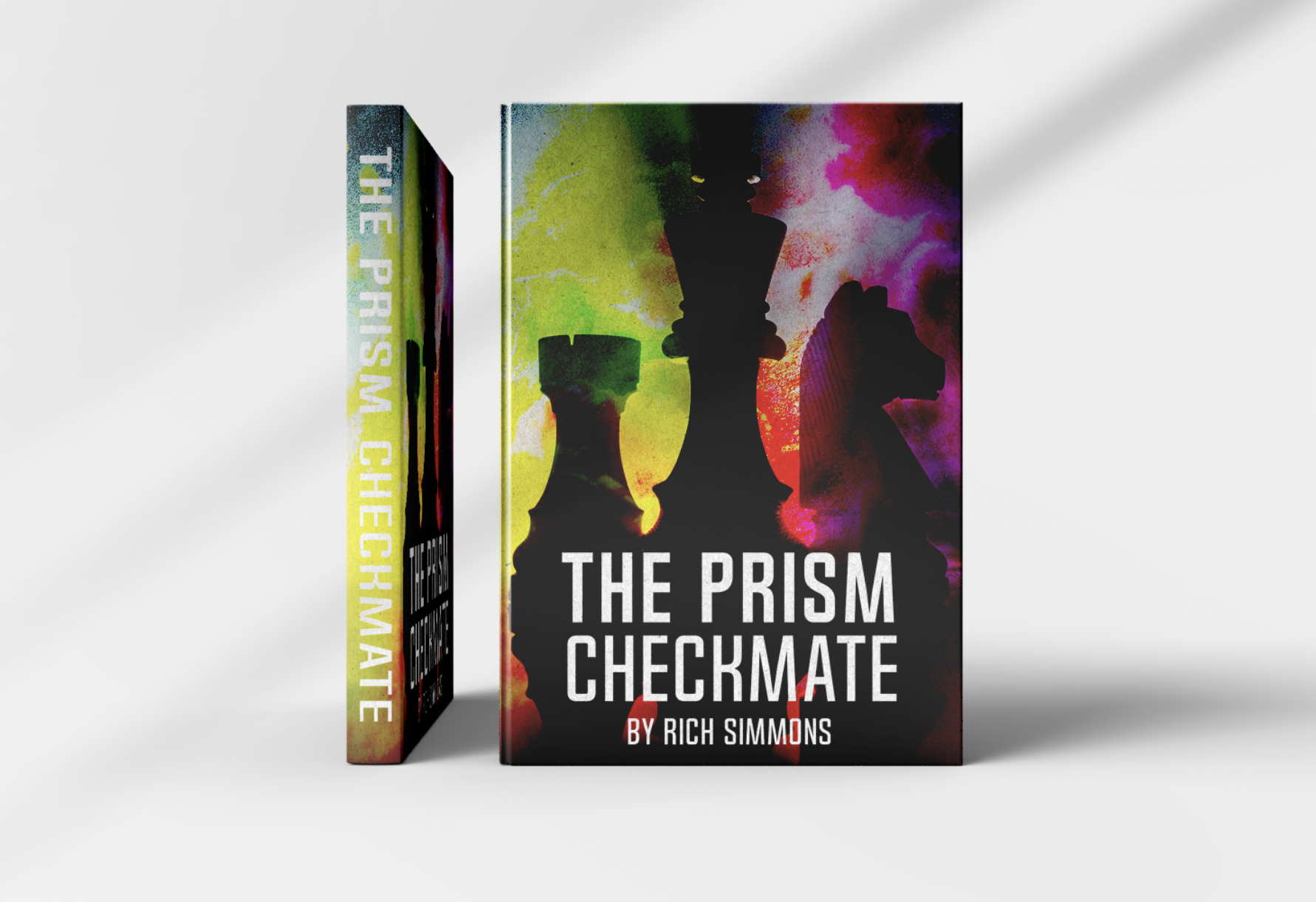
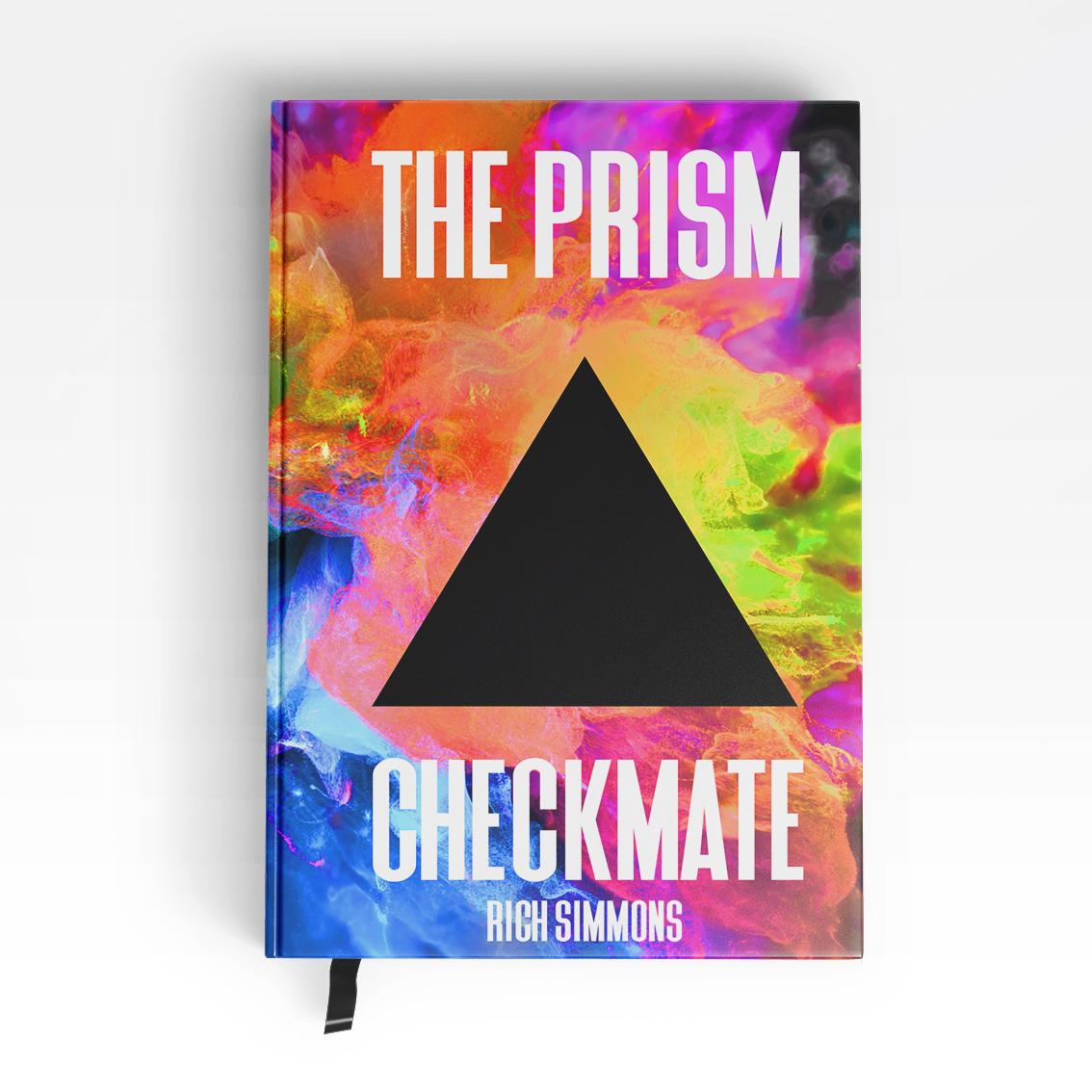
The Prism — Checkmate is the origin story of a new superhero set in London.
A powerful synthetic drug known as Met-X has begun circulating across the city, causing temporary mutations in its users. Crime rates surge as those enhanced by the drug gain unpredictable abilities. Behind the operation stands a calculating criminal mastermind known only as The Grandmaster, who views society as a chessboard and people as pieces to be moved, sacrificed, or promoted in pursuit of long-term control.
When a glowing, rainbow-hued meteorite crashes in the Mojave Desert, it is secured by the Creative Research and Development Laboratory Enterprise (CRADLE) before other global agencies can intervene. Transported to CRADLE’s headquarters on London’s Southbank, the meteorite displays unusual energetic properties unlike any known material. CRADLE’s director, Arthur Kinsey, assigns his most gifted scientist, Isaac Wells, to lead the investigation.
Isaac, alongside biomedical engineer Clara Banks and engineering prodigy Kenzi Nakamura, discovers that the meteorite contains a reactive compound capable of interacting with human biology at a cellular level. Its energy signature resembles the active component of Met-X. It becomes clear that the drug destabilising London may have originated from fragments of this extraterrestrial material.
When The Grandmaster learns that CRADLE possesses the meteorite, he orders an aggressive retrieval operation. CRADLE employees are kidnapped, and the Southbank facility is attacked by enhanced operatives fuelled by Met-X. Determined to rescue his colleagues, Isaac leads a counter-operation using experimental CRADLE technologies and prototype engineering systems. Though he succeeds in freeing hostages, he is gravely injured during the confrontation.
Isaac is rushed back to CRADLE, where he flatlines.
In desperation, Clara reveals she has secretly engineered a prismatic variant of Met-X derived from her research into the meteorite’s full energy spectrum. Unlike the unstable red version distributed by The Grandmaster, her version was designed to stabilise and harmonise the mutation process. With no time for approval or trials, she injects Isaac.
He survives.
Isaac awakens fundamentally changed. The prismatic compound grants him controlled, adaptive abilities tied to energy manipulation and enhanced perception. He becomes the first stable evolution of the meteorite’s power.
Initially conflicted about using his abilities, Isaac realises The Grandmaster is preparing a final escalation: a plan to trigger a chain reaction beneath London using weaponised meteorite energy embedded within the Underground system. The resulting explosion would release mutagenic energy across the transport network, exposing thousands and permanently shifting the balance of power in the city.
Refusing to allow further harm, Isaac adopts a new identity — The Prism — and, alongside Clara and Kenzi, who equip themselves with advanced CRADLE technology, launches a coordinated assault on The Grandmaster’s network. As the team draw out his enhanced operatives across the city, Isaac infiltrates the Grandmaster’s headquarters.
In the climactic confrontation, Isaac uses his full spectrum abilities to prevent the Underground detonation and dismantle the energy core powering the operation. The Grandmaster’s empire collapses, and the immediate threat to London is neutralised.
In the aftermath, Isaac accepts that his transformation cannot be undone. Rather than retreat from the consequences of Clara’s decision, he chooses to embrace his new role. As The Prism, he commits to protecting the city while continuing CRADLE’s research into the meteorite’s wider implications.
Though The Grandmaster has fallen, Met-X has already altered the landscape. Enhanced individuals exist. The technology cannot be erased. The chess match may have ended, but a new evolutionary era has begun.
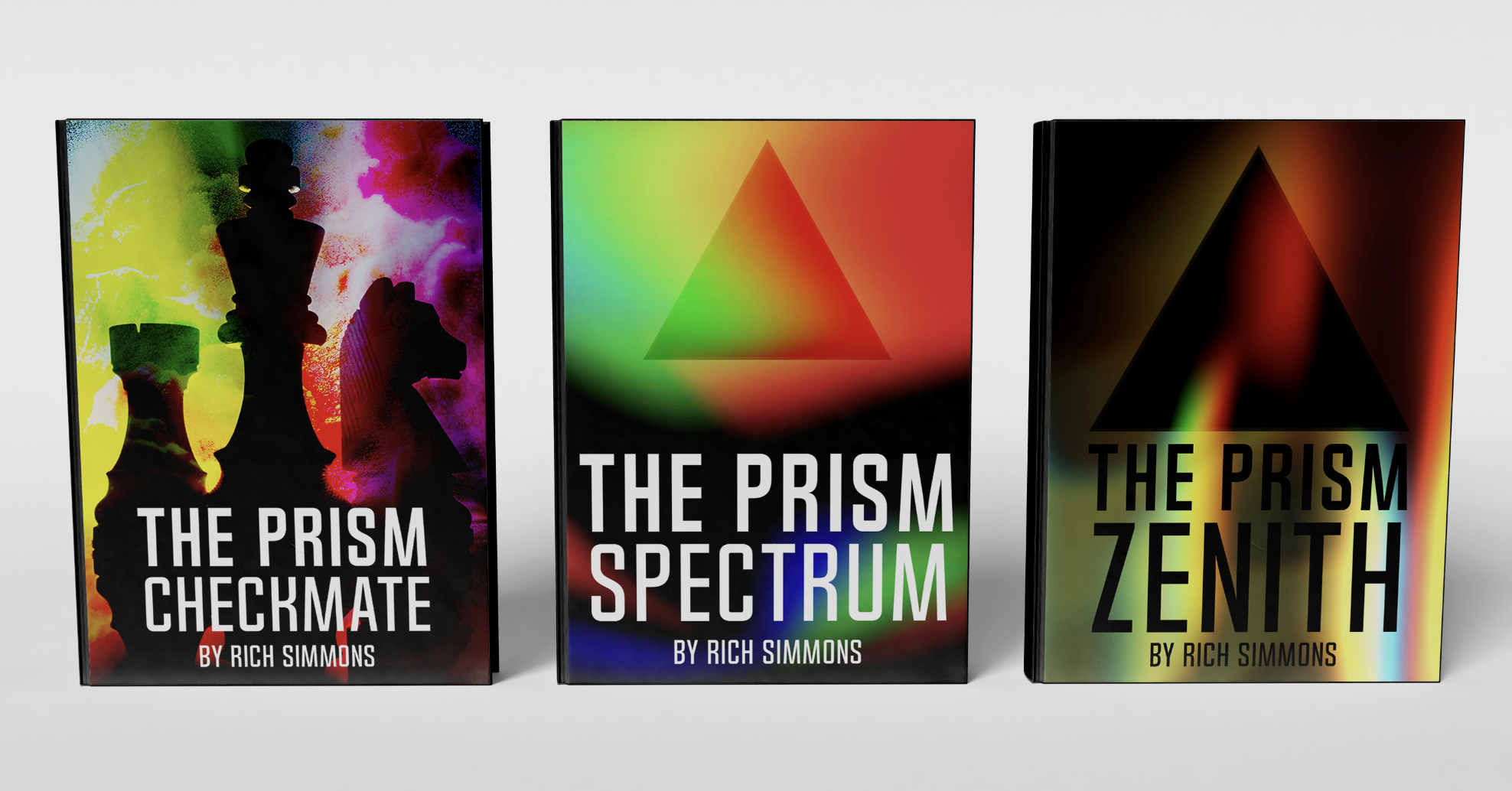
Checkmate is the first instalment in a planned trilogy charting the rise of The Prism. The series follows Isaac Wells from prodigy scientist to the emergence of a new kind of hero, exploring the scientific, moral and societal consequences of engineered evolution. Subsequent novels, Spectrum and Zenith, expand the scope from a single city under threat to a world reshaped by the power first unleashed in London. Alongside the core trilogy, additional prequels and spin-off stories are planned to explore the origins of CRADLE and the wider emergence of enhanced individuals — forming an interconnected narrative universe known as the Prismverse.
A powerful synthetic drug known as Met-X has begun circulating across the city, causing temporary mutations in its users. Crime rates surge as those enhanced by the drug gain unpredictable abilities. Behind the operation stands a calculating criminal mastermind known only as The Grandmaster, who views society as a chessboard and people as pieces to be moved, sacrificed, or promoted in pursuit of long-term control.
When a glowing, rainbow-hued meteorite crashes in the Mojave Desert, it is secured by the Creative Research and Development Laboratory Enterprise (CRADLE) before other global agencies can intervene. Transported to CRADLE’s headquarters on London’s Southbank, the meteorite displays unusual energetic properties unlike any known material. CRADLE’s director, Arthur Kinsey, assigns his most gifted scientist, Isaac Wells, to lead the investigation.
Isaac, alongside biomedical engineer Clara Banks and engineering prodigy Kenzi Nakamura, discovers that the meteorite contains a reactive compound capable of interacting with human biology at a cellular level. Its energy signature resembles the active component of Met-X. It becomes clear that the drug destabilising London may have originated from fragments of this extraterrestrial material.
When The Grandmaster learns that CRADLE possesses the meteorite, he orders an aggressive retrieval operation. CRADLE employees are kidnapped, and the Southbank facility is attacked by enhanced operatives fuelled by Met-X. Determined to rescue his colleagues, Isaac leads a counter-operation using experimental CRADLE technologies and prototype engineering systems. Though he succeeds in freeing hostages, he is gravely injured during the confrontation.
Isaac is rushed back to CRADLE, where he flatlines.
In desperation, Clara reveals she has secretly engineered a prismatic variant of Met-X derived from her research into the meteorite’s full energy spectrum. Unlike the unstable red version distributed by The Grandmaster, her version was designed to stabilise and harmonise the mutation process. With no time for approval or trials, she injects Isaac.
He survives.
Isaac awakens fundamentally changed. The prismatic compound grants him controlled, adaptive abilities tied to energy manipulation and enhanced perception. He becomes the first stable evolution of the meteorite’s power.
Initially conflicted about using his abilities, Isaac realises The Grandmaster is preparing a final escalation: a plan to trigger a chain reaction beneath London using weaponised meteorite energy embedded within the Underground system. The resulting explosion would release mutagenic energy across the transport network, exposing thousands and permanently shifting the balance of power in the city.
Refusing to allow further harm, Isaac adopts a new identity — The Prism — and, alongside Clara and Kenzi, who equip themselves with advanced CRADLE technology, launches a coordinated assault on The Grandmaster’s network. As the team draw out his enhanced operatives across the city, Isaac infiltrates the Grandmaster’s headquarters.
In the climactic confrontation, Isaac uses his full spectrum abilities to prevent the Underground detonation and dismantle the energy core powering the operation. The Grandmaster’s empire collapses, and the immediate threat to London is neutralised.
In the aftermath, Isaac accepts that his transformation cannot be undone. Rather than retreat from the consequences of Clara’s decision, he chooses to embrace his new role. As The Prism, he commits to protecting the city while continuing CRADLE’s research into the meteorite’s wider implications.
Though The Grandmaster has fallen, Met-X has already altered the landscape. Enhanced individuals exist. The technology cannot be erased. The chess match may have ended, but a new evolutionary era has begun.
Checkmate is the first instalment in a planned trilogy charting the rise of The Prism. The series follows Isaac Wells from prodigy scientist to the emergence of a new kind of hero, exploring the scientific, moral and societal consequences of engineered evolution. Subsequent novels, Spectrum and Zenith, expand the scope from a single city under threat to a world reshaped by the power first unleashed in London. Alongside the core trilogy, additional prequels and spin-off stories are planned to explore the origins of CRADLE and the wider emergence of enhanced individuals — forming an interconnected narrative universe known as the Prismverse.
- 32 Connections | 34 Followers
- 9 Reactions
- 6 Posts
- 4 Photos
- 0 Videos
- 2 Stories
- Brighton, United Kingdom
- Male
-

- The first 6 chapters and prologue are now available to read on......The first 6 chapters and prologue are now available to read on...
https://www.richsimmonsart.com/theprism
#theprismThe first 6 chapters and prologue are now available to read on... https://www.richsimmonsart.com/theprism #theprism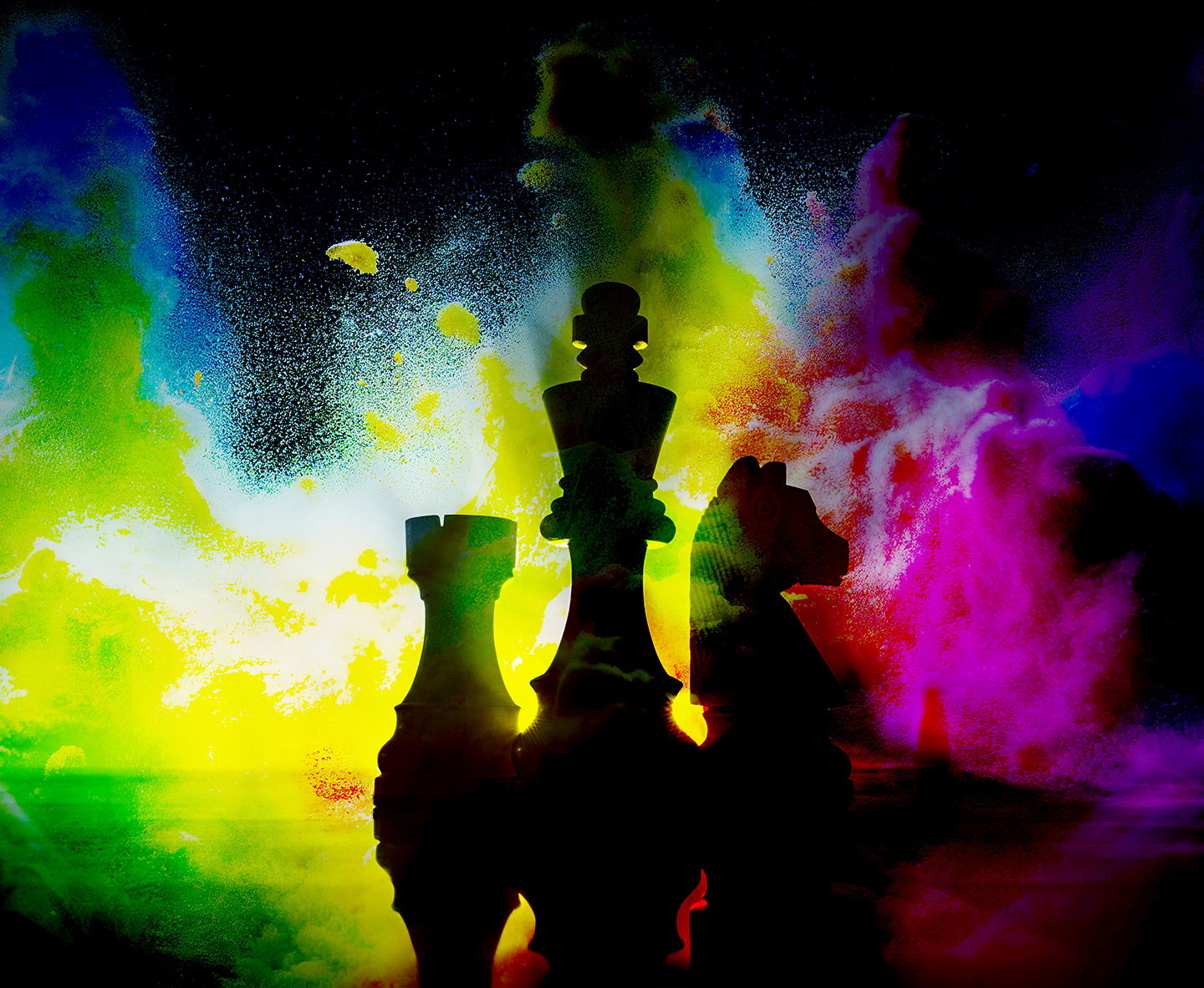 0 Comments 0 SharesReact





 CommentShare
 - PROLOGUE The odds of being hit by a meteorite are astronomically small,...PROLOGUE
The odds of being hit by a meteorite are astronomically small, but that is where this story begins.
As a teenager, I was on holiday in Tenerife. I sat out on the hotel balcony one warm August night, watching the Perseid meteor shower light up the night sky. I had never seen shooting stars so bright or abundant in my life and settled in for a night of stargazing.
As I laid back on the white plastic lounge chair, craning my neck up to watch the show, I felt a sharp pain on my thigh. Looking around for an insect to blame for interrupting my tranquillity, I saw a small black rock on the terracotta tiled floor beside me.
'That wasn't there a minute ago, was it?' I asked myself.
Picking it up, I noticed it looked charred, like a miniature lump of coal that had fallen from a barbecue. I got up, looking for a plant pot or something that would explain the pea-sized black rock in my palm. Nothing matched it. That's when the brightest shooting star of the night streaked across the sky, disappearing beyond the horizon.
It couldn't be, could it?
Shooting stars are anything from fragments of asteroids to particles the size of a grain of sand, burning up as they pass through our atmosphere and tonight, there were hundreds of these celestial visitors passing right above me.
Without another explanation for the pain radiating through my thigh, I sat back down and squeezed my fist around the small rock and watched its friends fall to the earth.
Almost half a lifetime later, on Christmas Day, I get a phone call from my Dad.
"Your Grandad has had a stroke."
I spent the day alone in my art studio, waiting for updates and trying to process the news. Finally, I got the call that night that he had passed. After refusing the paramedics offer of going to the hospital, he died in his own bed, stubborn and proud to the end.
The next day, we drove to my Grandparents house in Whitstable, England, to help my Grandma and do the things I suppose you have to do when a family member passes. Grieve, support, tell stories, remember the good times.
My Grandad was always a bit of a mystery to me. He was a heavily tattooed former Navy man, but I only really knew him as the man who would write poems and draw his grandkids bespoke, personalised birthday cards every year. We weren't a close family, seeing them only once, maybe twice a year, but when I did, I wanted to know about his tattoos, art, and poems. I wanted his stories.
I didn't realise just how many stories he had until he was gone and we found a locked suitcase under his bed. Upon opening it, we discovered a treasure trove of beautifully handwritten notepads containing stories, poetry, lyrics, diaries and more. We knew he wrote birthday cards for us, but this was a surprise for all of us to find.
Why was it hidden, locked away without telling anyone what he was creating?
The only answer I can come up with is one that made me sadder than his actual passing. He was afraid to share them for fear of judgement or ridicule. His pride overshadowed the storyteller he kept locked inside, only allowing glimpses of his true self to emerge to make his grandkids smile once a year on their birthdays.
I left the next day to travel home, determined to find a way to honour him and not let his legacy stay locked away in a suitcase. If he was too afraid to share his storytelling with the world, then maybe I could do it in his honour. I was already following in his footsteps in some capacity by embracing my artistic side and pursuing a career in that, so maybe I also could write like he did. Perhaps I had a storytelling gene in me too. Only one way to find out.
Over the following weeks, I started putting ideas together on what kind of story I could tell. Ever since that summer holiday when I was hit by a shooting star, I had been fascinated by meteorites. It's the kind of thing Stan Lee would be proud of writing, and it seemed like the perfect theme to create a story around.
By the time I went to my Grandads funeral, The Prism was already being created, and I was able to smile, knowing that his legacy would have a chance to live through me. To have the name Simmons printed on a book and released for people to read and enjoy will be as much for my Grandad as it is for me.
The universe chose to touch me with that small black rock. Something astronomically rare sparked this idea, and my grandad gave me the fuel to help light the fire that grew to become The Prism.
After a long, extraordinary, twisting road to get here, I am proud to say that I am now a storyteller like my Grandad.PROLOGUE The odds of being hit by a meteorite are astronomically small, but that is where this story begins. As a teenager, I was on holiday in Tenerife. I sat out on the hotel balcony one warm August night, watching the Perseid meteor shower light up the night sky. I had never seen shooting stars so bright or abundant in my life and settled in for a night of stargazing. As I laid back on the white plastic lounge chair, craning my neck up to watch the show, I felt a sharp pain on my thigh. Looking around for an insect to blame for interrupting my tranquillity, I saw a small black rock on the terracotta tiled floor beside me. 'That wasn't there a minute ago, was it?' I asked myself. Picking it up, I noticed it looked charred, like a miniature lump of coal that had fallen from a barbecue. I got up, looking for a plant pot or something that would explain the pea-sized black rock in my palm. Nothing matched it. That's when the brightest shooting star of the night streaked across the sky, disappearing beyond the horizon. It couldn't be, could it? Shooting stars are anything from fragments of asteroids to particles the size of a grain of sand, burning up as they pass through our atmosphere and tonight, there were hundreds of these celestial visitors passing right above me. Without another explanation for the pain radiating through my thigh, I sat back down and squeezed my fist around the small rock and watched its friends fall to the earth. Almost half a lifetime later, on Christmas Day, I get a phone call from my Dad. "Your Grandad has had a stroke." I spent the day alone in my art studio, waiting for updates and trying to process the news. Finally, I got the call that night that he had passed. After refusing the paramedics offer of going to the hospital, he died in his own bed, stubborn and proud to the end. The next day, we drove to my Grandparents house in Whitstable, England, to help my Grandma and do the things I suppose you have to do when a family member passes. Grieve, support, tell stories, remember the good times. My Grandad was always a bit of a mystery to me. He was a heavily tattooed former Navy man, but I only really knew him as the man who would write poems and draw his grandkids bespoke, personalised birthday cards every year. We weren't a close family, seeing them only once, maybe twice a year, but when I did, I wanted to know about his tattoos, art, and poems. I wanted his stories. I didn't realise just how many stories he had until he was gone and we found a locked suitcase under his bed. Upon opening it, we discovered a treasure trove of beautifully handwritten notepads containing stories, poetry, lyrics, diaries and more. We knew he wrote birthday cards for us, but this was a surprise for all of us to find. Why was it hidden, locked away without telling anyone what he was creating? The only answer I can come up with is one that made me sadder than his actual passing. He was afraid to share them for fear of judgement or ridicule. His pride overshadowed the storyteller he kept locked inside, only allowing glimpses of his true self to emerge to make his grandkids smile once a year on their birthdays. I left the next day to travel home, determined to find a way to honour him and not let his legacy stay locked away in a suitcase. If he was too afraid to share his storytelling with the world, then maybe I could do it in his honour. I was already following in his footsteps in some capacity by embracing my artistic side and pursuing a career in that, so maybe I also could write like he did. Perhaps I had a storytelling gene in me too. Only one way to find out. Over the following weeks, I started putting ideas together on what kind of story I could tell. Ever since that summer holiday when I was hit by a shooting star, I had been fascinated by meteorites. It's the kind of thing Stan Lee would be proud of writing, and it seemed like the perfect theme to create a story around. By the time I went to my Grandads funeral, The Prism was already being created, and I was able to smile, knowing that his legacy would have a chance to live through me. To have the name Simmons printed on a book and released for people to read and enjoy will be as much for my Grandad as it is for me. The universe chose to touch me with that small black rock. Something astronomically rare sparked this idea, and my grandad gave me the fuel to help light the fire that grew to become The Prism. After a long, extraordinary, twisting road to get here, I am proud to say that I am now a storyteller like my Grandad.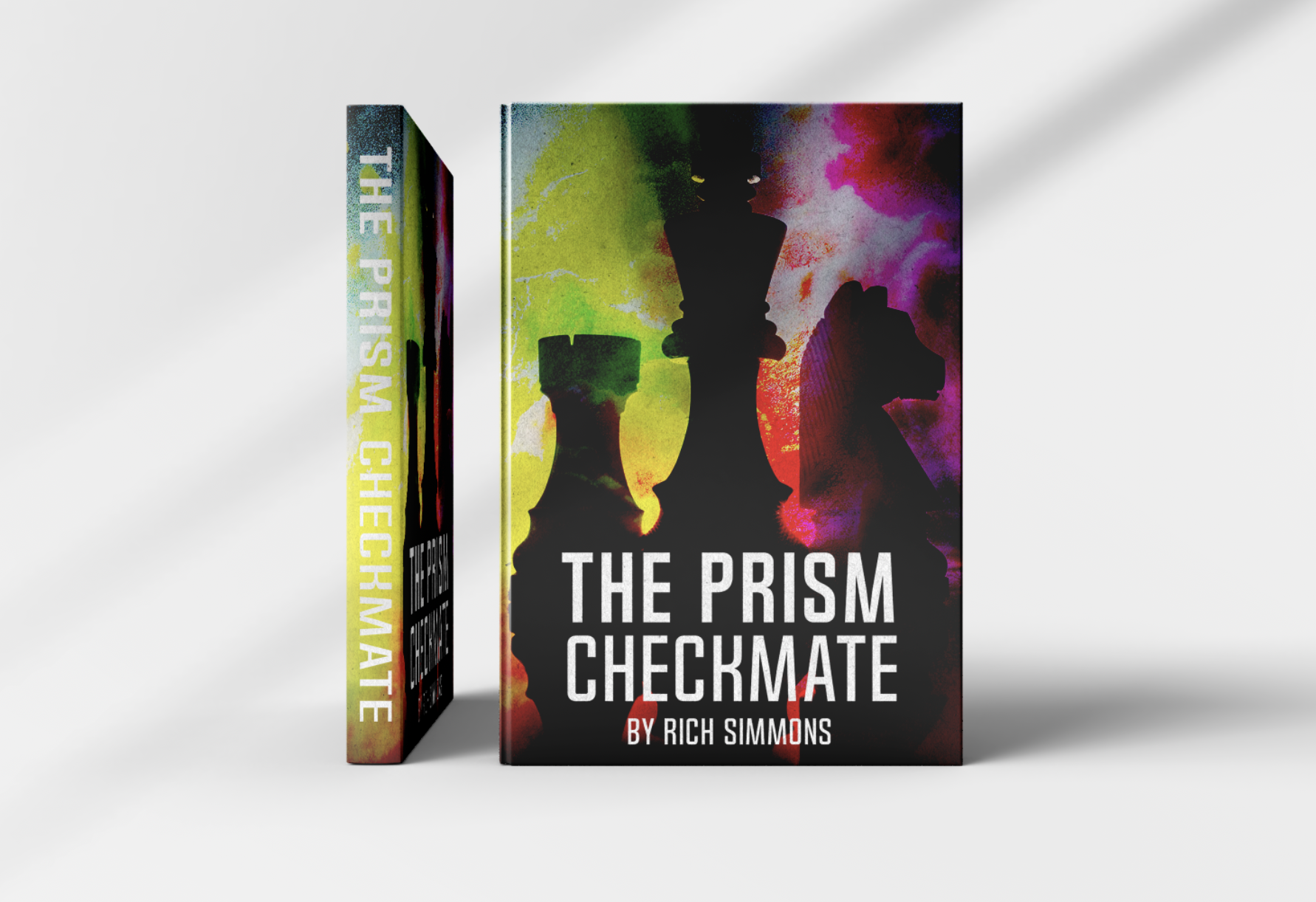 0 Comments 1 Shares 2 React 2CommentShare
More Stories
×