

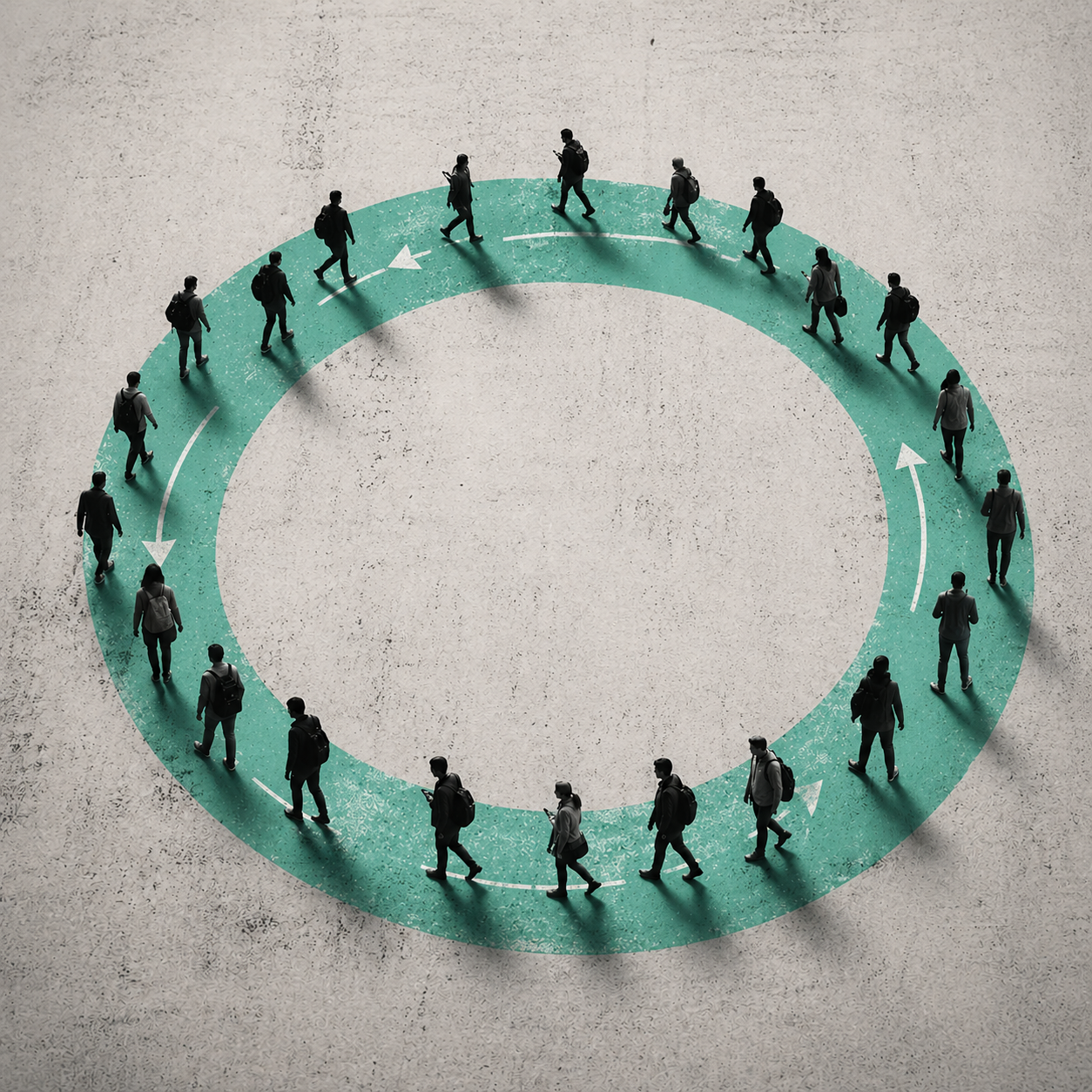
There’s a strange pattern that keeps repeating itself across the internet, and once you notice it, it becomes difficult to unsee. A platform reaches critical mass, embeds itself into people’s daily routines, becomes the place where identity, communication and opportunity quietly converge, and then at some point, something shifts. Not gradually, not in a way that invites calm reflection, but in a way that feels like a rupture. Trust is questioned, intentions are scrutinised, and suddenly the relationship between user and platform feels less like a partnership and more like a compromise that has gone on for too long.
We’ve seen it in different forms over the years. When the Facebook–Cambridge Analytica data scandal came to light, it wasn’t simply the details of data misuse that unsettled people, it was the realisation that something foundational had been misunderstood all along, that the exchange between user and platform had never been as transparent as it seemed. Later, as conversations around AI intensified, artists began to question what it meant to share work on platforms like Instagram, not in a theoretical sense but in a deeply personal one, where the boundary between inspiration and extraction started to blur, prompting some to explore alternatives such as Cara. And when Elon Musk acquired Twitter, the reaction wasn’t a single, unified movement but a kind of digital scattering, with users drifting towards spaces like Bluesky, each one carrying the faint promise of being similar enough to feel comfortable, but different enough to feel like a step away.
What’s interesting is not just that people leave, but how they leave, because despite the scale of these moments, despite the noise and the headlines and the declarations that “this time is different”, the movement itself rarely feels like progress, it feels lateral. People don’t step into something fundamentally new, they step into something recognisably familiar, something that mirrors the structure they’ve just abandoned, with the same feeds, the same interactions, the same underlying behaviours dressed in slightly different language or design. It is less an evolution and more a substitution, as though the goal isn’t to rethink the system, but to recreate it in a way that feels temporarily safer.
Part of this comes down to comfort, but comfort is only the surface layer of something deeper. When people are frustrated or disillusioned, they are not in a mindset that encourages exploration or experimentation, they are looking for resolution, for a way to remove the discomfort without introducing new uncertainty. Familiar interfaces reduce friction, familiar behaviours require no relearning, and in a moment where trust has already been shaken, the last thing most people want is to take on additional risk. So they move sideways, not because it is the most exciting option, but because it is the most understandable one.
There is also the quiet force of habit, which is often underestimated in conversations about technology. Platforms are not just tools, they are environments that shape behaviour over time, training people into patterns that feel natural simply because they have been repeated often enough. The way we scroll, the way we present ourselves, the way we measure attention and validation, all of these things become second nature, and stepping outside of them requires a level of conscious effort that most people will only exert when absolutely necessary. Even then, the instinct is not to abandon those behaviours entirely, but to carry them into the next space, to rebuild the same rhythms in a slightly different setting.
This is why outrage becomes such a powerful catalyst, because without it, very little changes. People will tolerate inefficiencies, overlook misalignments, and accept systems that don’t fully serve them for far longer than they might admit, simply because the cost of change feels higher than the cost of staying. It is only when something breaks, when the balance tips from mild dissatisfaction into something sharper and more emotional, that movement begins. But by that point, the movement is reactive rather than intentional, driven by a desire to escape rather than a desire to evolve, and so it rarely leads to anything fundamentally different.
What gets lost in all of this is the possibility that the model itself might be the problem. If every migration leads to a near-identical environment, then perhaps the issue is not the individual platform but the shared assumptions they are built on, the idea that social networks must centre around feeds, that discovery must be passive, that connection must be filtered through algorithms, that opportunity is something stumbled upon rather than actively created. When those assumptions go unchallenged, innovation becomes cosmetic rather than structural, and new platforms inherit the limitations of the old ones before they’ve even had a chance to define themselves.
This is where genuinely different ideas face their greatest challenge, because they do not benefit from the safety of familiarity. They ask more of the user, more attention, more curiosity, more willingness to engage with something that doesn’t immediately map onto existing habits, and without a moment of urgency to force that shift, they can be easy to overlook. It is not that people don’t want better systems, it is that “better” is harder to recognise when it doesn’t resemble what already exists.
And so the cycle continues, with each rupture creating a brief window of movement, and each movement settling into something that feels reassuringly similar, until the next rupture arrives. It raises a question that sits slightly outside the usual conversation about platforms and features, a question about behaviour rather than technology, about whether we are waiting for things to go wrong before we allow ourselves to consider what might be right.
Because if the future of creativity, and work more broadly, is moving towards something more fluid, more collaborative, more interconnected, then it is worth asking whether the spaces we use are evolving in the same direction, or whether we are simply recreating familiar structures in new places, mistaking motion for progress. And if that is the case, then perhaps the real shift will not come from the next scandal or the next moment of outrage, but from a quieter decision to step outside of the cycle entirely, to engage with something not because it replaces what came before, but because it rethinks it from the ground up, not as an alternative, but as a different direction entirely.
Maybe the real shift won’t come from the next scandal, or the next moment that forces people to leave, but from a quieter decision to choose something different before that moment arrives. Not as a reaction, but as a step forward. Because if every migration simply recreates what came before, then we’re not really changing anything at all, we’re just relocating the same system under a different name.
The more interesting question is what happens when a platform isn’t built as an alternative, but as a rethink, something designed around how creativity actually works in practice, where discovery is active, connection is intentional, and opportunity is part of the structure rather than something left to chance. That kind of shift doesn’t rely on outrage to exist, it relies on people recognising that better doesn’t have to wait for something to break, and choosing it anyway.
To read more of this story, sign up for free!
Join CreateScene to unlock the full story and discover more amazing stories...