
I’ve spent a long time fascinated by the way humans create heroes. Not just in comic books or films, but across history, across cultures, across entire civilisations. Whether it’s a prophet in the desert, a warrior king, a saint, a celebrity, or a man in a cape, the instinct behind these stories seems to repeat itself with an almost biological certainty. It’s one of the most striking patterns in human culture: we elevate ordinary people into extraordinary symbols. We exaggerate their qualities, magnify their virtues, sometimes even invent miracles or powers. We build entire belief systems around them. We follow them, fear them, imitate them, worship them.
It raises an obvious question — one that’s often asked but rarely answered properly — why do humans need heroes at all?
It’s tempting to think of hero-making as a cultural accident, a side-effect of religion or literature or entertainment. But the deeper I’ve gone into this subject — through psychology, anthropology, evolutionary theory, and my own experience as an artist and storyteller — the more I’ve become convinced that hero-making is not optional. It's hardwired. Something ancient in us compels admiration. Something instinctual compels us to elevate certain figures above others. Something deep in the architecture of the human mind makes us create stories about people who are stronger, wiser, kinder, purer, or more extraordinary than we are.
And when I say “architecture of the mind,” I mean it literally.
We like to imagine ourselves as rational beings, creatures who think logically about the world, who make decisions carefully, who see things clearly. But when you look at how the brain actually functions, the picture becomes very different. Human beings are storytellers first, thinkers second, and rationalists when we remember. Our brains didn’t evolve for accuracy; they evolved for meaning. We survive by making sense of the world through narrative. We remember life in story form. We learn morality through story. We manage fear, hope, love, grief, and identity through story.
Heroes, as far as I can tell, are the most powerful kind of story we ever invented.
To understand why, you have to go back thousands of years, long before writing, religion, or civilisation. Imagine a small tribe living on a savanna — a few dozen people trying to survive harsh weather, predators, rival groups, and the constant uncertainty of nature. In this environment, not everyone is equal. Some individuals are stronger, some more skilled, some more charismatic, some more intelligent or resourceful. Those exceptional individuals weren’t just admired — they were essential. A tribe with a stronger hunter survived better than one without. A tribe with a visionary leader outcompeted its neighbours. A tribe with someone who could inspire courage had a psychological advantage in times of danger.
Evolution shaped us to notice strength, charisma, wisdom, and leadership — because those traits directly influenced survival and reproduction. In nature, the strongest animals attract mates; human behaviour follows similar patterns, though disguised by culture. We romanticise tall men, confident men, successful men, wealthy men — not because society is shallow, but because evolution shaped us to perceive those traits as signs of security and good genetics. Researchers have found these patterns across cultures that never interacted. The instinct is older than civilisation. Our ancestors wanted their children to inherit the best traits possible, and so admiration for exceptional individuals became a reproductive strategy.
But it wasn’t just about mating. Proximity to powerful or charismatic individuals offered safety. If the strongest warrior liked you, you were less likely to be killed. If the most capable hunter respected you, you ate more often. If the spiritual leader supported you, the tribe treated you better. Status became a survival strategy. Being close to the most admired person in the tribe meant being safer in every sense.
This is the biological core of hero-worship.
We admire greatness because ancient humans needed greatness to survive.
And then something fascinating happened.
Humans didn’t just admire strong individuals — we began to storytell them.
A hunter who killed a lion became “the man who spoke to lions.”
A wise woman who cured fevers became “the woman protected by spirits.”
A brave leader who defeated a rival tribe became “the hero chosen by the ancestors.”
Every retelling magnified the story: strength became superhuman strength; courage became divine courage; good fortune became destiny. The events didn’t even need to be literal to be emotionally true. A story that exaggerated a hero’s traits was more memorable, more inspiring, and more effective at teaching lessons. And evolution, which favours anything that strengthens cohesion and instruction, allowed those stories to spread.
Over time, heroes became more than just individuals. They became symbols — embodiments of moral values, tribal identity, and social cohesion. And when storytelling became complex enough, those symbols evolved into gods.
When humans didn’t understand lightning, they imagined a hero or deity with a hammer.
When they didn’t understand the ocean, they imagined a hero who controlled the waves.
When they didn’t understand sickness, they imagined spirits or divine punishment.
When they didn’t understand morality, they invented mythic figures who embodied it.
Religion, at its earliest stage, was storytelling. Not deception — interpretation. Humans used the best tool they had to explain the world. Story came long before science, so myths filled the gaps that biology, physics, and astronomy couldn’t yet reach.
This is the context in which figures like Jesus appear — not as exceptions, but as perfect examples of the mythic process. Strip away theology for a moment and look at his story from a cultural, historical, and psychological perspective. A charismatic teacher emerges in a time of oppression and instability. He preaches radical compassion, challenges power structures, encourages kindness, and inspires a devoted following. After his death, his followers — grieving, frightened, desperate for hope — enlarge his story. His birth becomes miraculous. His teachings become divine. His life becomes symbolic. His death becomes sacrifice. His memory becomes resurrection.
I don’t say this to diminish the moral significance of Jesus; I say it to honour the very human process behind the story. His mythic growth follows the same narrative pattern seen in every culture across time. It’s the same pattern that creates warrior gods in ancient Greece, demigods in Sumerian epics, and miracle-working heroes in folklore across Africa, India, China, and the Americas. Humans respond to stories of saviours. The hero’s journey resonates because our brains are structured to understand the world through archetypes.
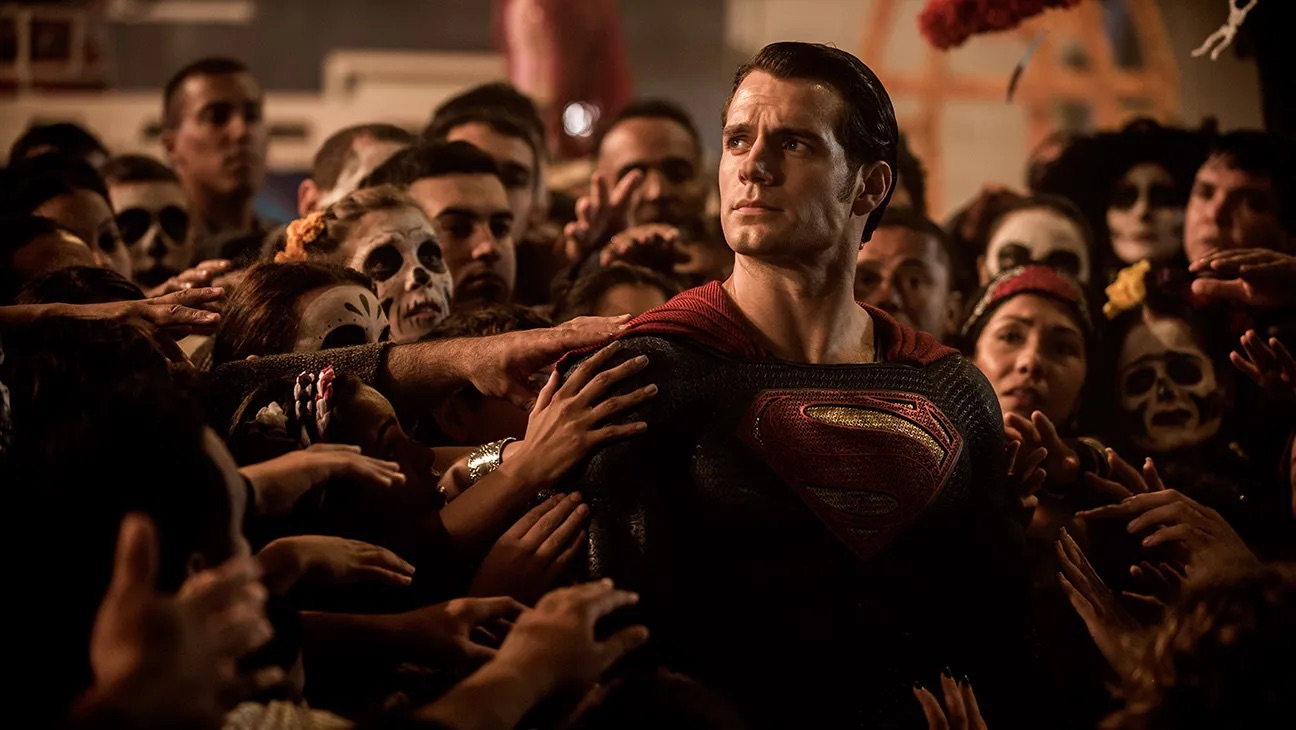
That’s why, thousands of years after the gospels were written, a different saviour appeared in a comic book — one who shares surprising structural parallels with Jesus. A child sent from above. A father whose guiding voice remains in his mind. A humble upbringing among ordinary people. A life dedicated to helping humanity. A symbolic death. A resurrection. A moral message of hope, justice, and compassion. Superman isn’t a parody of religion; he’s a continuation of an ancient pattern. If Jesus is an early mythological template, Superman is a modern one. One belongs to scripture; the other to popular culture. But both speak the same psychological language.
The distinction, of course, is that Superman doesn’t claim to be real — and that matters. Fictional stories can teach morality without threatening eternal consequences. A child reading about Spider-Man learns responsibility without fearing divine punishment. Someone reading about the X-Men learns empathy for the marginalised without worrying that loving the wrong person will condemn them to hell. Modern mythology is honest about its nature. It doesn’t pretend to be literal cosmology; it presents itself as symbolic instruction. And that makes it, in many ways, a safer storyteller.
Religion wasn’t created to deceive — it was created to explain. But over time, some stories were taken so literally that they became institutions of power. When a society believes that its leaders have access to the supernatural, those leaders gain extraordinary influence. Claim you can speak to God, and people will follow you. Claim you can interpret His will, and they will obey you. Claim you control access to heaven or hell, and you become untouchable. The original storytellers — the priests, prophets, shamans, scribes — weren’t always malicious, but the power inherent in storytelling is immense. Story became law. Myth became social control. Heaven and hell became tools as much as metaphors.
Our hero instinct — originally about survival — became a vulnerability in the political hands of religious authority. A story used to teach morality became a mechanism to enforce it.
This is why modern storytelling, particularly fictional storytelling, feels like a liberation. We still need heroes — evolution guarantees that — but we don’t need fear-based narratives to learn right from wrong. We don’t need stories that pretend to be factual in order to move us. We can learn from Batman without believing in Gotham, from Superman without believing in Krypton, from Luke Skywalker without believing in the Force as literal physics. Fiction’s power lies in its honesty: it knows it’s a story, and it trusts us to find meaning anyway.
This is where my identity as an artist becomes relevant. I never set out to become a philosopher or a theorist, but working in art and storytelling forces you to confront the deeper function of creativity. The more I’ve reflected on storytelling, the more I’ve recognised that artists occupy a very old role. We are the modern successors of the storytellers who shaped early myth. We carry the same responsibility, whether we acknowledge it or not. Everything we create becomes part of the culture's symbolic landscape. Every character, every image, every narrative we release into the world influences someone’s imagination.
Being an artist is not simply creating images; it's participating in the long evolutionary process of shaping human meaning. When I create art, I’m not just providing entertainment. I’m contributing to a shared mythology — one that might help someone feel stronger, braver, more empathetic, or more connected. Storytelling has always been the tool humans use to transform fear into hope, chaos into meaning, and individuality into identity. And art is simply one of the contemporary forms that storytelling takes.
This is why I believe so strongly that the future of moral education should come from a combination of storytelling, science, and art. Science explains the world; storytelling explains humanity. Religion once tried to do both, but in a world where knowledge is expanding faster than ever, it makes more sense for each field to play to its strengths. Fiction doesn’t need to be factual to be profound. Science doesn’t need mythology to be meaningful. And art doesn’t need dogma to be powerful.
We now have the opportunity to build a new mythic landscape — one that teaches empathy without fear, courage without threats, morality without manipulation. And if humanity is destined to create heroes forever, then we have the responsibility to create better ones. Ones based on compassion, equality, creativity, diversity, and truth. Not heroes who judge or divide, but heroes who challenge us to become the best versions of ourselves.
Understanding the Evolutionary Hero Imperative doesn’t diminish the power of myth; it clarifies it. It shows us why heroes matter, why stories matter, why belief matters. It proves that the human need for symbolic figures is not a weakness but a fundamental part of our nature. And once we understand that, we can choose to shape our heroes intentionally, not accidentally.
When I create art, I do so knowing that humans will always seek someone to look up to. Always. But I also know that the kind of heroes we elevate — and the stories we tell about them — are choices. We can choose heroes who inspire kindness over fear, imagination over doctrine, humanity over hierarchy. We can build a mythic landscape that supports exploration, creativity, and curiosity. And that, I think, is one of the most exciting possibilities of our time.
We are no longer bound to stories that claim literal truth to teach moral truth. We are free to use fiction honestly. Free to build new myths consciously. Free to create symbolic worlds that reflect our knowledge, not our ignorance. Free to design stories that reflect the world we want, not the world we inherited.
Heroes will always exist. The instinct is too old, too deep, too biological to disappear. But we have arrived at a moment in human history where we can decide what those heroes represent — not by fear, not by superstition, not by political manipulation, but by creative intention.
In the end, the greatest truth I’ve learned from studying heroes is simple:
heroes don’t descend from the sky — we lift them there.
They are reflections of our desires, our fears, our values, and our imagination. They are the stories we choose to believe, the qualities we choose to admire, the ideals we choose to pursue. And if that’s true, then the responsibility for the future of heroism sits with all of us — especially those of us who tell stories for a living.
This, to me, is what it means to be an artist. Not just to create images, but to help guide the evolution of myth. To shape the symbolic landscape that future generations will grow up with. To participate in the endless process of building meaning. To remind people — gently, creatively, imaginatively — that the stories we tell about heroes are really the stories we tell about ourselves.
And if we tell better stories, we might just become better people.